
6–9 Months: Sensory Play Ideas to Support Your Baby’s Brain & Crossing Midline
Between 6 and 9 months, your baby is going through a major neurological leap.
This is the stage where their brain is rapidly organizing movement, coordination, and communication between both sides of the body. You may notice:
Rolling both directions
Sitting more independently
Reaching with intention
Beginning to pivot, scoot, or crawl
Bringing everything to their mouth
Behind all of this?
The brain is learning how to connect left and right.
And one of the most important ways it does that is through something called…

Play patty cake with your baby to help left and right brain connect.
Crossing Midline
“Crossing midline” means your baby can move a hand, arm, or leg across the center of their body.
This might look like:
Reaching the right hand across to grab a toy on the left
Kicking across the body
Rolling with fluid coordination
Bringing both hands together at center
This is a huge milestone for brain development, because it builds communication between the two hemispheres of the brain.
When this connection is strong, it supports:
Coordination and crawling
Visual tracking
Feeding skills
Later skills like reading and writing
If it’s not happening easily, babies may:
Favor one side
Avoid rolling one direction
Have a harder time organizing movement
The good news?
We can gently support this through simple, playful sensory experiences.
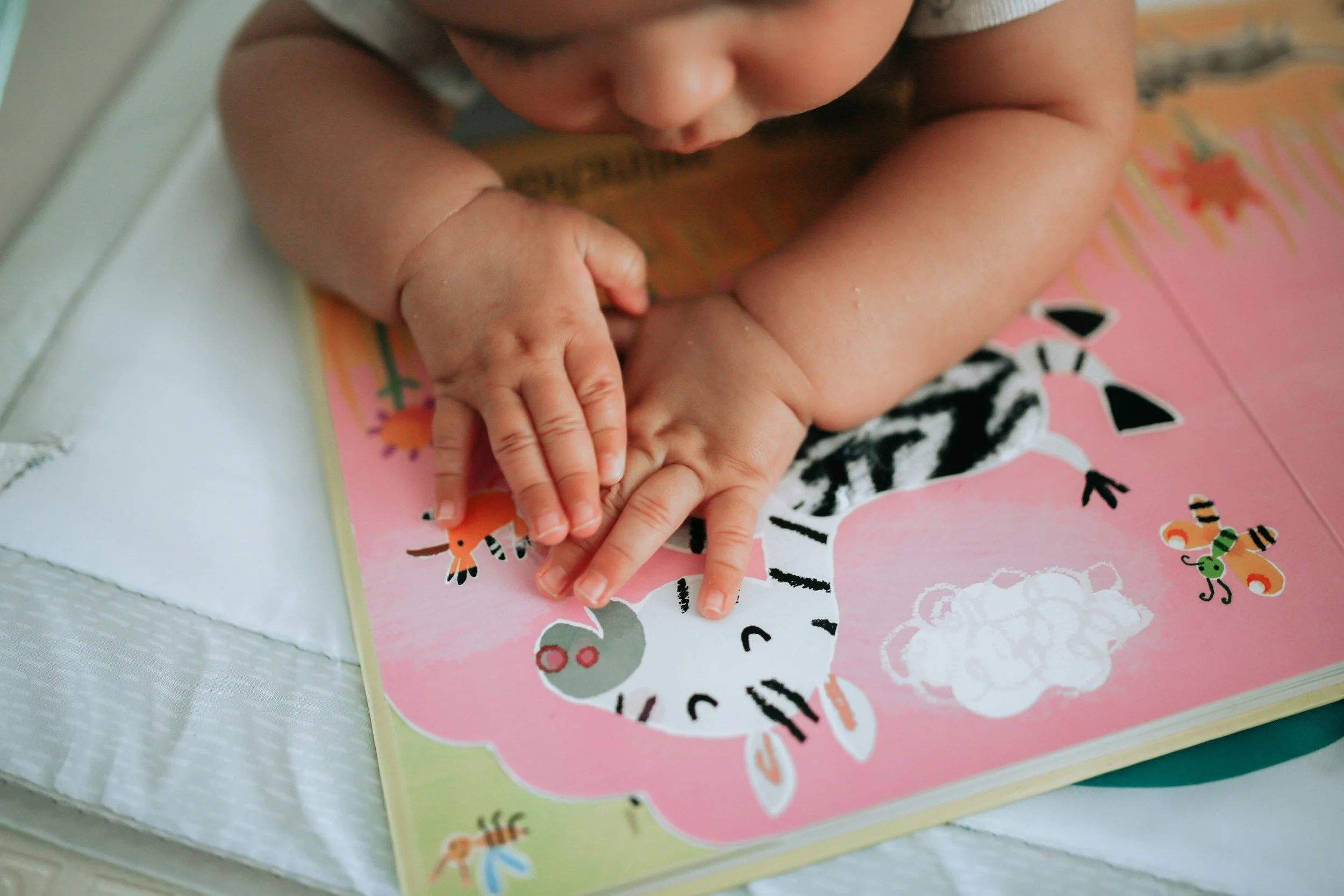
-Let your child explore with a texture book.
Sensory Play Ideas for 6–9 Months
At this age, sensory play doesn’t need to be complicated. It just needs to be intentional, repetitive, and engaging.
1. Texture Book Exploration (Perfect for Midline!)
Create or use a soft sensory book with different textures:
Fuzzy
Crinkly
Smooth
Ribbed
How to use it:
Present the book at midline (center of their body)
Slowly move it side to side
Encourage them to reach across their body to explore
This supports both sensory input AND crossing midline.
2. “Toy Across the Body” Reach Game
Place a favorite toy slightly out of reach—across their body.
Example: Baby is using right hand → place toy on the left side
Let them problem-solve and reach across.
You’re helping build:
Coordination
Core activation
Brain-body connection
3. Dry Brushing for Sensory Integration
Using a soft baby brush, gently brush:
Arms (down toward hands)
Legs (down toward feet)
Back and shoulders
Then bring hands together at center.
This can:
Wake up the nervous system
Improve body awareness
Support more organized movement
Read more about dry brushing in our Sensory Blog.
4. “Hand-to-Hand” Play at Midline
Gently guide your baby to bring both hands together:
Hold a toy together
Tap hands together
Play “clap” slowly
This builds:
Bilateral coordination
Awareness of center
Early communication between brain hemispheres
5. Tummy Time Reaching Across
While on their tummy:
Place toys slightly off to one side
Encourage reaching across the body
You can also gently shift their weight side to side.
This supports:
Pre-crawling patterns
Shoulder stability
Cross-body coordination
6. Sensory Basket Play
Create a small basket with safe household items:
Wooden spoon
Silicone teether
Soft cloth
Crinkle paper
Offer items one at a time at midline, then slightly to each side.
This encourages:
Exploration
Reaching patterns
Sensory processing
Why This Stage Matters So Much
This is the foundation for everything that comes next.
When babies can:
Move fluidly across their body
Coordinate both sides
Process sensory input with ease
They are building the groundwork for:
Crawling and walking
Feeding and oral function
Focus and learning
Emotional regulation

A Gentle Reminder
Every baby develops at their own pace.
But if you’re noticing:
A strong preference for one side
Difficulty rolling or reaching across
Tension through the body
Feeding or latch challenges
These can be signs that your baby’s nervous system may need a little extra support.
How We Can Help
At Focus Chiropractic, we support babies with:
Gentle cranial and bodywork
Nervous system regulation
Improving comfort, movement, and feeding
Hands-on guidance for parents to continue at home
Our goal is to help your baby feel more organized, connected, and at ease in their body.
Because when the nervous system is supported, development flows more naturally.
Ready to Support Your Baby’s Next Stage?
The 6–9 month window is a powerful time to check in and support your baby’s growth.
Book a visit and let’s support their brain and body—together.
Schedule your baby’s visit today.